Venice, Italy

Venice, Italy

Friday, December 17, 2010

Purpose of this Blog

DSCF1416

Picture: Myself along the Fjord of Norway

Hi there! For whatever reason that has caused you to chance upon this space, I welcome you to my blog space! I have previously started out on this blog at the end of 2008 but it fell into disuse due to my laziness and lack of commitment to update the posts. Well, after 2 years, in the end of 2010, I decided to restart my blog partly because I have some free time to spare before I return to Singapore from my exchange programme in Denmark.

I have been deliberating on the exact purpose of me doing blogging. One problem I face has been thinking what exactly I should include in each of the post. How personal should I go? Am I doing blog for a public audience and not so much for myself? I needed a resolution so that I can blog in the future with some boundaries. It will be great if you could read through what I have to say, so that you can see all my posts in perspective. 

FOR WHOM: First and foremost, this blog is for my personal development. Since resuming my blogging activity, there have been instances when what I typed in one post could stir up other thoughts or cause me to examine/scrutinise my own trend of thoughts, often leading to some deeper reflection which has been personally satisfying. I can say that the main audience I am interested in is – myself. I’m not being narcissistic here, I just see this space as a place where I can develop my ideas/thoughts. Of course, if you come to my blog, there is no way I can stop you from viewing, and inevitably my private/personal space is also somehow public. Now this leads me to WHAT I think I will usually post about.

WHAT: With the freedom of access in the internet, there is a high chance that someone who is reading through my posts may have completely opposing views from myself. I am not someone who likes confrontations, but I welcome conversations if you wish to discuss what I post. However, I think that sometimes differences can be irreconcilable, and my stand is that if that is the case, conversations don’t have to degrade to something nasty. Once again, I have to stress that this space is first and foremost a place for personal development of ideas, so it is impossible for everyone to agree on everything I have written.

I would emphasise so much on the above because in my posts are doses of religion, society and (popular) culture mixed together, issues which could be sensitive to some, if not all of us. I’m in a process where I am trying to make sense of the world around me, and I do so as a human like anyone of us, but also as a Christian. I very much enjoy Japanese popular culture and can go at lengths to describing certain phenomena, but I do not hold back from talking about these issues from a Christian perspective. May I hope the posts, while not fully agreed by any of you, will nevertheless enrich you by offering different perspectives.

As such, I doubt this blog is a ‘I ate sandwich in the afternoon for my lunch’ blog. That is not to say I will not talk about my daily dealings of life, but I think these are of secondary importance.

That’s all I have to say just to frame my blog in certain boundaries. As I said, I like Japanese popular culture very much, and I try to include videos of songs I’m currently listening to, so here is one, with an interesting title of Toilet’s God (I think it is something like that =/). Its a song about a grandmother and I guess the simplicity of her love for her grand daughter. The song seems to be a big hit in Japan, with more than 5.1 million hits!

Wednesday, December 15, 2010

Some (Okay, its quite a lot actually) Thoughts on Private Sector and Culture through a short review of フリーター、家を買う

DSCF2726

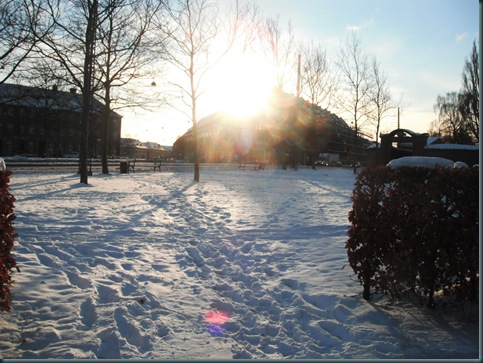
Picture above: Morning in snowy Copenhagen

I have been pondering on my concluding comments from the previous post regarding the lack of social critique on Singapore TV. On a second thought, our local shows are not detached from reality, and there are a few shows such as Renovaid and its Chinese version on channel 8 which are focused on the plight of marginalised individuals. But the way these shows are produced seem to individualise the problems and even with the help given by volunteers and producers (like finding benevolent employers willing to give them a chance of work) one is left feeling a bit powerless as to the real possibility of the individuals having any substantial improvement at the end of the show. While individual problems are consequences of individual circumstances, more often than not, they are the symptoms of structural/societal problems which only structural/broader-level solutions could help these people. Till then, for the help rendered to these individuals, even though they may not be far-reaching, they are still something we should appreciate and be thankful for. Not to do anything is worse right?

The variety show that is perhaps closest to Jack Neo’s movies in terms of portraying social satire is none other than The Noose (I encourage you to look up on youtube for its videos). The mockery on authorities is quite obvious, and I wonder how MDA has approved for the series to be shown on national television.
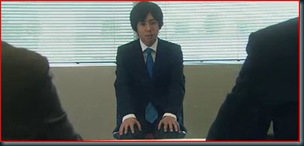
CaptureNow going back to my thoughts of フリーター、家を買う. One of the strongest points put across through the series is how not to write off or despise people who are working in physical labour jobs such as construction work, because of a lack of education or due to other unfortunate circumstances (In Seiji’s case, he had to urgently earn money to cope with family expenses and later to save up to shift house). The writers and producers behind the series have put this point across by elevating the non tangible qualities exhibited by these construction workers, values such as teamwork, caring for one another – in essence, casting these people as humane, real, as people whom you will experience warmth with – in contrast to those from the corporate white-collar world who are cold, where not much emphasis is placed on relationships etc. While I could not show you the clip, but the above observations are almost exactly mentioned in one scene when Seiji explained in an interview why he has been working for so long at the construction company (he said how in office, Capture2interactions are not genuine, and going to gatherings amongst colleagues was painful, but in the construction site, people are genuine and treat each other with dignity). I was so agreeing with him when he made those comments! Well, it is a bit hard to hide my contempt for the corporate culture as you may have suspected.

I am also at a crossroads as I decide my future career path. I’m thankful for the results I have received, and I am optimistic about my future prospects. But what route should I take? Should I go public sector or private? My girl friend has been sharing with me her experiences in work which largely confirms the above observations. She recounted how her manager was surprised when she just asked for his drink preference so that she can, in the future, buy that out of a polite gesture. His surprise could perhaps reflect his ‘resignation’ that he does not expect that kind of respect and treatment from fellow co-workers in the office because such good-will gesture is non-existent in the first place?

While I can be quite an idealist, I also know the need to be practical (I mean, being practical is what Singaporeans are well-known for right). At this moment, I am more inclined to go towards the private sector, maybe in corporate communications or human resource. Sprouting out these terms don’t necessary mean I know what they involve, but I think working with people and just being involved in planning or strategizing is my cup of tea and these areas fit the bill. But one thing I know for sure is the culture that I will be confronted with – a corporate culture.

One thing I have learnt in Denmark is that culture is necessarily created. Our society’s tendency to fear losing out and competing incessantly does not just exist since 1819. It was created by, or rather more precisely a result of, what the state has done to our education system (this maybe a generalisation but it nevertheless is true to a large part). What is second nature to us as culture does not emerge independently from nature, but has been moulded by fellow human beings, often those in positions of power. While not all elements in Singapore’s culture is negative, some are. I once attended this workshop by a very senior human resource director from GIC who claimed he has scouted and recruited spyingmany of the world’s best talents to GIC. He said that the culture of any company is determined by the policies set by the leadership, especially policies of reward and promotion. He gave the example of Shell, of how a new CEO decided to make job rotation a compulsory feature in the corporation, meaning that no one can stay in the same position for more than 4 years, and after one term, one has to reapply to the company as if he is a new employee. I understood that this strategy helped to push up productivity and profits, but I can’t imagine the emotional and social costs incurred with the anxiety, competition and insecurity.

So, culture is created by people, period. And people themselves can also create a counter-culture as a form of resistance to unhealthy forms of prevailing culture.

I think this is what Jesus Christ has came to do and is continuing that work through His Body, the church. He taught a way of living that is counter to his time, especially regarding acceptance and inclusion of those marginalised (I have more to say on this as I deliberate on my reflections for Christmas) rather than degrading judgement. Since culture is created by people, then really, the underlying conflict between cultures (there is a popular academic term for this called ‘culture wars’ ) is one based on power held by people of opposing cultural values. Whoever is more powerful can exert or impose their cultural values over the wider group. As Christians in a corporate environment with our own culture which can run contrary to that of the office, what power do we possess? What and who are we fighting against? Is the conflict against our superiors who seem unreasonable to us?

Perhaps some of you (if not at least me) know where I am leading to. Ephesians 6:12 ‘For we do not wrestle against flesh and blood, but against principalities, against powers, against rulers of the darkness of this age, against spiritual hosts of wickedness in the heavenly places’. I think we are tempted to fume at the injustice we may receive or perceive from superiors and bear grudges against colleagues who have unfairly treated us. But there could be something deeper than what is seen (As Optimus Prime from Transformers so often reminds us, there is more than meets the eye).

The conflict may well be in the spiritual dimension. Yes, superiors have power and authority over us, and the overall corporate culture perhaps is spread through such power channels. And God also exhorts us to submit to authority. But as believers I think we need to discern between what is godly and what is not as we subject ourselves to authority (which many a times is secular as the example of Caesar by Jesus show) and deal with the consequences of being subjected to that authority. I think as believers while we live in a prevailing culture which is not fully godly, we need to carve out a space where we assert godly cultural values. And that no doubt requires conviction!

I don’t want to keep on going on, but as a concluding comment,Jesus_Christ_3_by_pablorenauld I want to share from Matthew 7:12 : ‘Therefore, whatever you want men to do to you, do also to them, for this is the Law and the Prophets’. I was reading a commentary by Pastor Chuck Smith on this chapter, and realised the above verse is also known as the Golden Rule. Many of us will also know that many religious and great moral teachers have taught about this before. Individuals like Confucius and Plato (I think, but definitely one of the Greek philosophers) have talked about it. But what is really surprising is that when they talk about this, they frame it in a negative way, i.e. Don’t do to others what you don’t want to be done unto you i.e. passive stance. But Jesus my good Lord has framed it in a proactive, positive way – do to others what you want to be done unto you. It’s not passive, its taking the initiative, that first step, and seeing how the ‘boomerang effect’ run its course, just like that gesture my girl friend displayed towards her superior.

While saying the above, I have this fear that in such a culture of the office, gestures of goodwill will be preyed upon by vulture-minded people and they would think you are naive to be made so easily vulnerable. That’s why I think to take the initiative to help another, at the expense of your time to do your own work, needs conviction and confidence in God. Once again, culture is created by people, so it implies that it is not static but dynamic. While we don’t have the bureaucratic power to effect much changes (unless you are the boss!), we possess spiritual power in our good Lord Jesus to resist, rescue and redeem culture from the clutches of the enemy.

Monday, December 13, 2010

フリーター、家を買う Review

                                                                         Freeter_ie_o_kao   

Movie poster   I was watching Music Station the other day, and found out that one of the artistes was singing the theme song for a drama with Ninomiya Kazunari (二宮和也). For those not familiar with Japanese pop, he is one of the members from Arashi (嵐). Well if that still doesn’t help, you should have at least heard of the war movie Letters from Iwo Jima right? Ninomiya starred in that film as one of the main protagonists Saigo, a reluctant soldier called up to serve in the Japanese army at a time Japan was losing the War. It was one of the more memorable films I watched in my life, not least because of Ninomiya’s convincing acting, but also due to the perspective of the entire film straying away from the stereotypical Japanese soldier as fervent IwoJimaloyal subjects to the Emperor, exposing the humanity of the individuals who did not always adhered to the cultural values of the day but had real struggles of family, life. I highly recommend anyone interested to watch the film, although the 3 hour (from what I remembered) length maybe a drag to some.   

SeijiHistory aside, I began to watch this drama called フリーター、家を買う (Part-time worker, buys a house)and boy oh boy, was it so relevant to Singapore society and in some sense myself too. Basically, the drama is about Take Seiji, a 25 year old dude who, according to himself, went to a so-so high school, graduated from a so-so university, got employed in a so-so electrical company, having a so-so father, mother and sister, and living a so-so life.

The series unfolds as he works as a freeter (フリーター; pronounced as furiitaa) in a construction company and faces the challenge of having a mentally ill mother who collapsed emotionally and became clinically depressed under the weight of guilt. In order to bring about the dawn of that day ‘when a smile will return to her mother’s face’, Seiji decided the best thing to do for her was to buy a new house, moving out of the neighbourhood which was the source of her mum’s depression due to bullying by other housewives.

What emerges from this drama is a series of subtle or overt statements of social critique on some of the norms in the highly-conformist Japanese (and Singapore, no?) society, especially the discrimination against those who are blue-collar workers and thoNinomiyase who suffer mental problems. Prejudices were gradually replaced by respect and acceptance as the audience is drawn to the courage and inner strength of those discriminated against. What attracted me to this series was the genuine human touch added to almost each of the main characters, we see and do identify with them on their vulnerabilities, anguish and hurts. The series is still showing, currently at the 8th episode with 2 more to go.

What has impressed me thus far is the rigour with which the writers behind the series has displayed in critiquing the elitist and judgemental nuances simmering within mainstream Japanese society. While the Japanese society is hierarchical, no doubt due to the Confucian tradition ingrained after centuries of Samurai rule (I learnt this from my Japanese exposure module), the media is freed up from the control of the state and is free in its exploration (now this aspect I think, is brought about after the American occupation).

Construction 2Think about this – will Mediacorp produce a drama focusing on the solidarity of construction workers and elevating their status in society? Well, I agree I’m stretching it a bit too far, considering how our government regards them as workers only to meet the short term needs of the economy, ready to be repatriated in times of downturn. I have to also bear in mind that the workers in the series were Japanese, and I did not see any foreigners as well, and I have read before that foreigners also endure a marginal existence there.

But I suppose the focus of the drama is more narrow, dealing with how native Japanese regard each other, and in that regard, it has done a pretty good job (something which Singapore can do more). To me, it seems that the only times you see overt social critique in Singapore media is through Jack Neo’s films like Money not Enough or I Not Stupid? I maybe wrong, considering the fact that I have distanced myself from local made dramas, but I do suspect that the content of the dramas we see on national TV have been censored to avoid any references of social criticism, which will somehow be associated with the state. Such perhaps is the result of how tightly bound up our mainstream media is with the governing institutions. 

I will touch on more of my thoughts of this drama in the following posts, but before I end off this post, let me present the trailer for this drama just for anyone interested to get a flavour of this series:

Trailer for フリーター、家を買う

Japanese Entertainment

One of the consequences of me coming to Copenhagen for exchange has been a freeing up of my personal time to engage in what has been a core of my interests - essentially almost anything to do with Japanese popular culture.

My relationship with Japanese popular culture, beginning with music or Jpop, started way back in 2000 when my mum bought a CD player along with 2 CDs which were a compilation of popular tracks from Avex Trax artistes such as Ayumi Hamasaki.

Over time there were two bands/groups that got me very involved in Jpop: Luna Sea (left) and Morning Musume (centre; literally meaning Morning Daughters). Fitting the stereotype of an ardent wota (it means an idol otaku - otaku being someone obsessed with a particular subculture, could be anime, idols or manga), I idolised and was pretty fanatic over one of the group's members, Ai Kago (right).


After some more years, I guess I matured and moderated my fanaticism, mainly also due to my increasingly busy schedule in JC and the reduced free time when I was in the army. Now, I just like sentimental rock songs in general (and Spitz specifically) but the liking for girl pop groups has not been lost in me, and very recently I have been hooked by AKB48's high octane performances and the youthfulness of the members.


I must also mention that even though my liking for Jpop has persisted over the past 10 years, I have found myself not engaging it like how I would have been doing 6 to 7 years back. As a student of Sociology, I cant help but to develop what my climate change professor in Copenhagen called the 'sociological reflex' - that sudden jerk or urge to see things from a social and cultural perspective. And not to mention that after being a Christian, there is this similar 'Christian reflex' in the sense of engaging in something from the perspective of a Christian. In a sense I could say I have matured in how I involve myself with Japanese popular culture.

Just take for example the group AKB48. I have been reading about how wotas could buy at one go hundreds of copies of their singles just to make sure their favourite group hit and stay at the top of the Jpop Oricon charts. Some would perpetually spend all their time and money just to indulge on their favourite idols. When I started listening to more of AKB48's songs, looked up more on the members through online forums or youtube, I cannot help but to feel myself abit consumed by them, albeit not to an extreme of willing to spend any money to buy their merchandise. You come to develop this sense of liking for them because of their personality (and of course their looks) but you know its quite impossible to know them personally, but then again they make themselves very known and personal through the interviews, photos, videos and presence in variety shows. You kind of get caught in this limbo, fantasy world where you could spend a deal of time thinking about them, wondering what they are doing etc.

I was particularly intrigued by the case of the most popular member in AKB48 - Maeda Atsuko.

She is very normal (okay you cant really tell just from this picture) but that has been my impression when I see her with the other girls. Yet she has been the cover girl for the group since 2005 and her name is (if I remember right)within the top 3 female name searches for Yahoo Japan. It is her mediocrity, and I presume that certain sense of vulnerability attached to her persona because of her ordinariness, that has attracted her to so many fans who have elevated her to a near cult status.

I did some mini research on Japanese fandom and came across this article by Christine Yano of Harvard University (Credits to my NUS libraries account which gives me access to the limitless amount of articles I can use for my Sociology etc research). I wont go into too much of the theoretical parts, but some of what she said made me realise sometimes I may perceive things from an ethnocentric or just a biased point of view?

Yano wrote that in the US, fandom is often 'denigrated as social pathology' and 'fans are negatively viewed as passive victims of manipulation who have easily fallen prey to the seductive power of mass media' and have an emotional void that is only filled by a 'fantasied "parasocial" relationship' (1997:336). BUT! In Japan, being a fan means fulfilling a culturally affirmed notion of amae or dependency, 'constituted by one who seeks indulgence (amaeru) and another who gives this indulgence (amayakasu)'.

According to her, 'dependency works in two directions. The fans support the public figure directly through economic means; the charismatic figure supports the fans indirectly through symbolic means'(1997:336). She further adds that 'The very charisma of the public figure becomes defined by the devotion of the followers. Fans make a person into a public, charismatic figure'. 'Not only is the position of the fan culturally affirmed in Japan, it is culturally lauded. To be a fan is to exemplify cultural values of loyalty and dedication, service to one's public superior, and empathetic support. A fan is one who embarks upon a permanent relationship of servitude. The hierarchical nature of that relationship is taken for granted and may even be part of the attraction. A fan is one eager for the opportunlty to serve, because in serving rests consummation of the relationship binding the two together.' (1997:336)

So what a distanced observer may regard as disturbing is something normal and even encouraged by the participants themselves. Well but I still cant help but to think that the Japanese entertainment industry has successfully 'exploited' cultural values to boost record sales. But I doubt the wotas feel that way though. In any case, I dont think my consumption of entertainment will border to anything beyond distanced admiration and enjoyment of the products by these idols. Im weary of going anywhere too extreme, because entertainment could serve sometimes as something like an 'opium' (to borrow Marx's famous indictment of religion as the 'opium for the masses'), satisfies your need but not necessarily inducing any attempt to change or improve your material conditions. The world of idols is also a fantasy world.


I also feel a thing or two for these idols. For a group as big as AKB48 (with 48 members, they now hold the Guiness Book of Record as the biggest pop group in the world), there are numerous rankings and popularity contests among the members. I wonder how those who are at the bottom would feel? And it seems what dominates their identity is what they can do, bolder, more sexier etc. Pheww.. I cant even think more already. But I guess they accept it as part of their lives in the entertainment industry. Well, they will find loyal wotas and fans who will support and do all they can to lift them up.


Saturday, December 11, 2010

Making a come back (like dont know since when)

I finally have so much free time like dont know since when... Im still thinking of what exactly to fill up, but I will just commemorate my return with the following song. Its alright if you dont know the lyrics, but I hope you catch the energy of these girls. They are AKB48, the most popular group in Japan yet. I may have despised myself for enjoying such supposedly 'superficial' stuff one year ago, but hey, people change right? I guess I will touch on these stuff in subsequent posts.. but meanwhile, enjoy:


Saturday, February 7, 2009

Brokeness

Have we come to a place where just because we know a bit more, we have gone through a bit more, that we have also grown in our pride, that we have become resistant to receive words of advice and guidance from people around us?

Could we have come to a place where we think ONLY God, or some church leaders, can speak into our hearts, whereas we resist others, defend ourselves, from the advice given by people, perhaps at the same level as us, or people even younger?

Volunteerism abused

Comments from Social Work SW1101E:


Well sometimes I feel that volunteers would try to show that the world owes them a big deal for they are doing for an organisation etc, such that as if the organisation got to kowtow to them to get help.


Voluntarism proceeds from one's own will, free choice and consent. If one wants to serve as a volunteer, then one should do it cheerfully. If one serves grudgingly, then it may be better off not to serve at all, if not, one can expand his/her capacity to serve joyfully.


What I think that any non-profit organisation needs are people who are willing to serve without complain or grudge, yes conditions may not be perfect but if one chooses to serve he/she should have prepared for that and persevere if need be.


If one thinks that the organisation owes them a great deal for his/her service, then I would say the organisation don't need to depend on such individuals to continue existence.


If one thinks the organisation owes them a big deal, then I suggest either he/she quit volunteering and sign on full time to work (then he/she will be paid for the work) or quit volunteering completely.